


Jessica Sardina: Fixing the Foundation
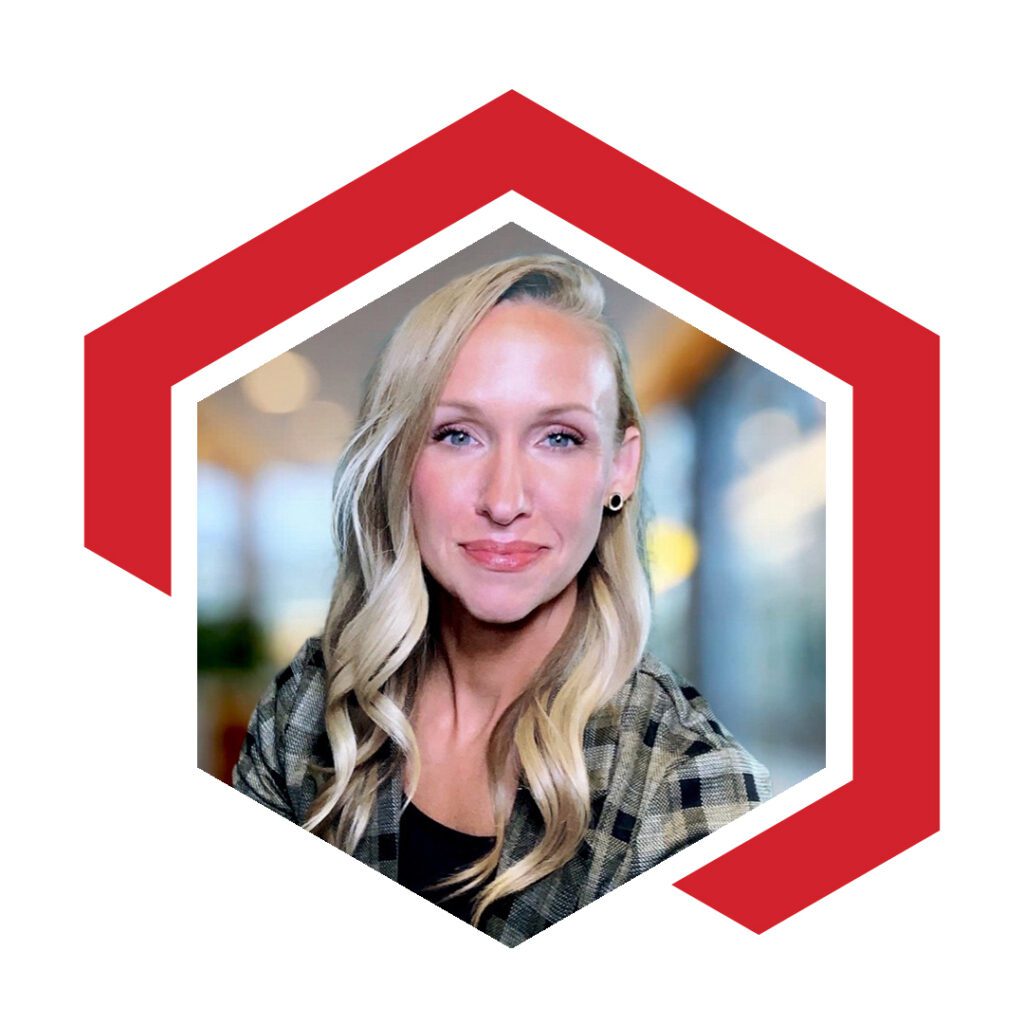
Early career lessons in data and systems shaped Jessica Sardina’s approach to scaling businesses and improving customer service. Learn more about her career and leadership perspective as R.S. Hughes celebrates International Women’s Month.
Contributed by Jessica Sardina, Marketing Vice President, 1 year
Building Work Ethic
Early in my career, I learned something that still shapes how I approach business today: if the foundation isn’t right, nothing built on top of it will scale.
I’ve been working since I was 14 years old. I started by taking care of kids, and in high school, I became a live-in nanny. By 16, I was working as a certified nursing assistant in a long-term care facility. That work taught me a lot. I was used to caring for people, I learned to manage my time well, and I gained an early look at how complex healthcare really is.
At the same time, I knew I did not want to stay in caregiving forever. What drew me in was business. I liked entrepreneurship. I liked figuring out how things worked and how to make them work better. That interest led me from long-term care into hospitals, where I moved closer to the business side through billing, coding and operational work.
From there, I joined a niche distributor serving the long-term care market. That was a turning point for me. I came in with healthcare experience and a strong understanding of the customer. I knew the market, I understood the challenges customers were facing and I started looking at where I could add value.
Discovering the Power of Data
I got into data early because that’s where you find opportunity. Customers tell you a lot through how they spend, what they buy and where their money goes. If you organize that information well, you can benchmark purchasing by product type, customer profile and company size. That helps customers make better decisions and helps the business focus on the right opportunities.
That first year in distribution set the foundation for my career. I began to understand data segmentation and how organizations use information to make strategic decisions. Because my team had visibility into total customer spend, we saw patterns that other parts of the company didn’t see.
That visibility created opportunities beyond our team. We built a business case to integrate our platforms so information could flow across the company and create a more seamless customer experience. This was long before tools to do this became standard. We didn’t have AI or advanced automation. We were manually stitching systems to make the business smarter and more connected.
Getting the It Right
One of the first challenges I discovered was that I couldn’t properly analyze the data because apples didn’t equal apples. Nothing was standardized. One customer would list a product one way, while another supplier used a completely different name for the exact same item. When that happens, you lose visibility across the business.
I wanted to understand why this was happening. Could we fix the problem upstream, or would we have to manually clean the data every time downstream? I studied how we were ingesting customer information. Because I was in a customer-facing market development role, I spent a lot of time interviewing customers and learning how they wanted systems to work. We ultimately redesigned those steps so information came in clean from the beginning, and everything downstream could connect and function properly.
When I presented the business cases for my ideas to our CEO and the board, I received pushback on how big the problem really was. That’s when I learned that it’s not enough to identify a problem. You have to demonstrate how widespread it is. That realization pushed me deeper into market research. I worked with research teams to document and quantify feedback to justify the direction we were proposing.
Over time, integrating data, systems, operations and the voice of the customer became my niche. I focused on building value-added services while improving the data platforms that enabled us to better serve customers.
Scaling Through Complexity
I spent years doing that work across multiple business units. Then COVID-19 hit, and my position was eliminated. At that moment, it felt like the worst thing that could happen. I was fully invested in what I was doing and loved the business and the market. But I was quickly recruited by a large industrial manufacturing company that was beginning a major data strategy initiative.
Soon after I joined, the company merged with another business, and my team was tasked with building the first data integration playbook and aggressively scaling through acquisition. That playbook eventually became the model for future acquisitions. Within months, we were on a path to doubling in size through acquisitions every year for the next four years, eventually becoming a Fortune 500 company.
The challenge quickly shifted from understanding one business to integrating dozens of businesses, systems and processes. At one point, we were working to bring together more than 60 ERP systems. When companies operate dozens of different systems with different data structures and product catalogs, it becomes incredibly difficult for customers to simply place an order.
If a company wants to operate as one organization, those systems, data models and processes must align. That was the opportunity in front of us. It was exciting because it allowed me to apply everything I had learned over many years at a much larger scale and much faster pace. The process that took 14 years to develop at one company, I was now executing within a single year.
Fix the Foundation First
After that experience, I joined a mid-sized company that was trying to figure out how to scale. They had hit a growth ceiling for six years in a row and didn’t understand why. I was brought in to lead their marketing, digital and data teams and determine what needed to change for them to grow into a larger organization.
The challenge was cultural. While leadership said they wanted change, they weren’t truly ready for it. I describe the situation this way: their floorboards needed to be rebuilt, but instead they were adding new structures on top of rotten boards that couldn’t support scale.
Operationally, they solved problems by adding more people. When everything is manual, the only way to increase volume is to keep hiring. But that approach doesn’t create real growth because the underlying processes never improve.
For mid-sized companies, fixing foundational systems is actually a major opportunity. The organization is not yet too complex, which makes it possible to rebuild processes that can truly support scale. In this case, the company simply wasn’t ready to do that work.
Bringing That Work to R.S. Hughes
That philosophy—fix the foundation first—is exactly what drew me to R.S. Hughes in early 2025. The company was at a point where thoughtful investment in systems and data could unlock the next stage of growth.
My first priority was listening. We brought the voice of the customer into the conversation and clarified what matters most. Customers come to R.S. Hughes for local service, ease of doing business and reliable on-time delivery.
That understanding is shaping our work today. We launched a master data architecture project and began rethinking how our data is structured. Over time, information had been centralized but never fully consolidated. That left us with duplicate data, inefficiencies and too much manual work.
By fixing that foundation, we can improve efficiency and scale more effectively. For customers, better data means better service. It means faster response times and more accurate information, whether they are calling Customer Care, emailing a team member or using self-service tools online.
The goal is simple: R.S. Hughes should know the customer completely, not just in one isolated moment. That is the work I care about most: building systems, processes and connections that make it easier for customers to do business with us.
Growing Into Leadership
My career started in healthcare, where I worked mostly with women. When I joined an industrial distributor in its technology division, it was almost entirely men. I remember walking in and thinking, “This is different.” What I liked immediately was the culture. It focused on solving problems and improving the business. That approach resonated with my personality, and I felt like I fit in.
Early in my career, I received a lot of feedback about how I communicated. It may have been a youth thing or a female thing, but I was often told to hold back. I was very direct about what I thought needed to change and wanted things to move quickly. Because I was presenting ideas to executive leadership, I often received feedback to slow down, read the room and remember that I was making proposals rather than decisions.
Developing that self-awareness became an important part of my professional growth. Over time, I became very comfortable in those environments. Even today, I am often one of only a few women in leadership meetings, but I feel confident when I have the information and understand how to connect the pieces.
I love working in this industry. There are many more women in the field today than when I started, so my experience no longer feels unusual. At R.S. Hughes, I am currently the only female executive leader, and I am excited about that opportunity. I value bringing a perspective that may not always be represented in the room.
More broadly, diversity of opinion is incredibly important to how organizations grow. At R.S. Hughes, we have a diverse group of people who have been with the company for multiple decades alongside colleagues who joined much more recently. Everyone brings something valuable to the table when we discuss issues that shape our future.
What has stayed constant throughout my career is a simple lesson: if the foundation isn’t right, nothing built on top of it will scale. Real progress comes from fixing what sits underneath the business so everything else can grow.